

Menopause and gut health

For anyone who has had to deal with menopause, or is going through it currently, you’ll know that it can really take its toll on your body. From hot flushes to major mood swings, we’re all aware of the obvious outward symptoms of menopause. But did you know that it also causes havoc with your digestive system?
What exactly happens in menopause?
Estrogen production starts to decline during perimenopause, and continues to fall until menopause. After that, the ovaries produce a different, weaker hormone called estrone.
This decrease in estrogen levels has been linked to increased risk of a host of illnesses including cancer, diabetes, heart disease, and metabolic disorders.
Estrogen and Gut Bacteria
Estrogen and gut bacteria have an intricate and complex relationship.
When estrogen levels decline, it reduces the diversity of the gut microbiome. And as our beneficial gut flora die off, the more damaging strains start to take over. This is called dysbiosis.
Our gut bacteria also play an important role in how the body processes estrogen and converts it into a form that we can actually absorb. Therefore, if our beneficial bacteria die off, our bodies will struggle even more to utilise what little estrogen we are producing.
Symptoms of dysbiosis
Our microbiome influences almost every aspect of our health. If it is lacking in diversity, or dominated by ‘bad’ bacteria, we can suffer from a variety of issues ranging from annoying to life threatening.
Poor gut health has been linked to:
- Inflammatory responses in the body
- Metabolic changes
- Unwanted weight gain
- Digestive issues
- Impaired immune system
- Mental health issues
- Mood swings
What can you do about it?
Menopause is an inevitable part of life for many people. And most of the time, they resign themselves to the idea that the symptoms that come alongside it are also inevitable.
However, when you understand that many of the symptoms commonly linked to menopause could actually be caused by a decline in your gut health, there’s plenty you can do about that!
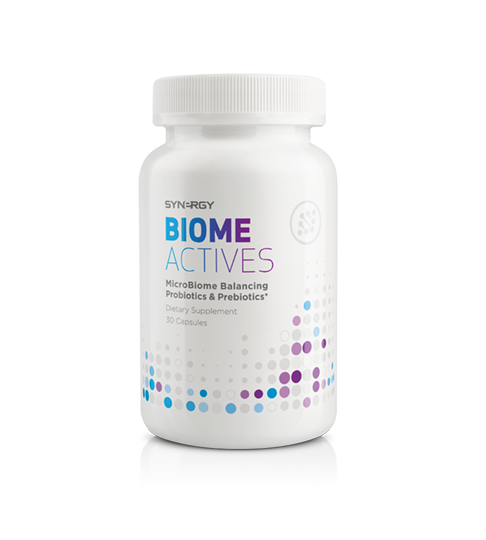
There are many foods that have been shown to help boost gut health, but they are sometimes not enough to tackle serious dysbiosis. A good quality probiotic supplement can help to restore some of the good colonies that you have lost due to a lack of estrogen.
It’s important to choose one that has been tested and developed in laboratory settings. Synergy’s Biome Actives are an excellent choice.
Don’t forget the prebiotics!
This step is often missed. It’s important to replace the colonies of gut flora that you’ve lost, but it’s also important to feed and nurture those colonies to help them thrive.
Prebiotics are fibers that help good bacteria to grow in the gut. They are present in many fruits and vegetables, but in order to ensure that you are consistently getting enough, it’s best to take them in the form of a supplement. Visit our Gut Health page to see a range of products that will help you to boost your microbiome.